Many people grapple with the question of whether dairy is beneficial or harmful to their health. With varying opinions from nutritionists, health experts, and enthusiasts alike, you may find yourself confused about the role dairy plays in your diet. This post aims to unpack the arguments, exploring both sides of the debate so you can make an informed decision about including dairy in your meals. From lactose intolerance to the potential benefits of calcium, let’s look into the imperative facts and insights surrounding dairy consumption and its impact on your well-being.
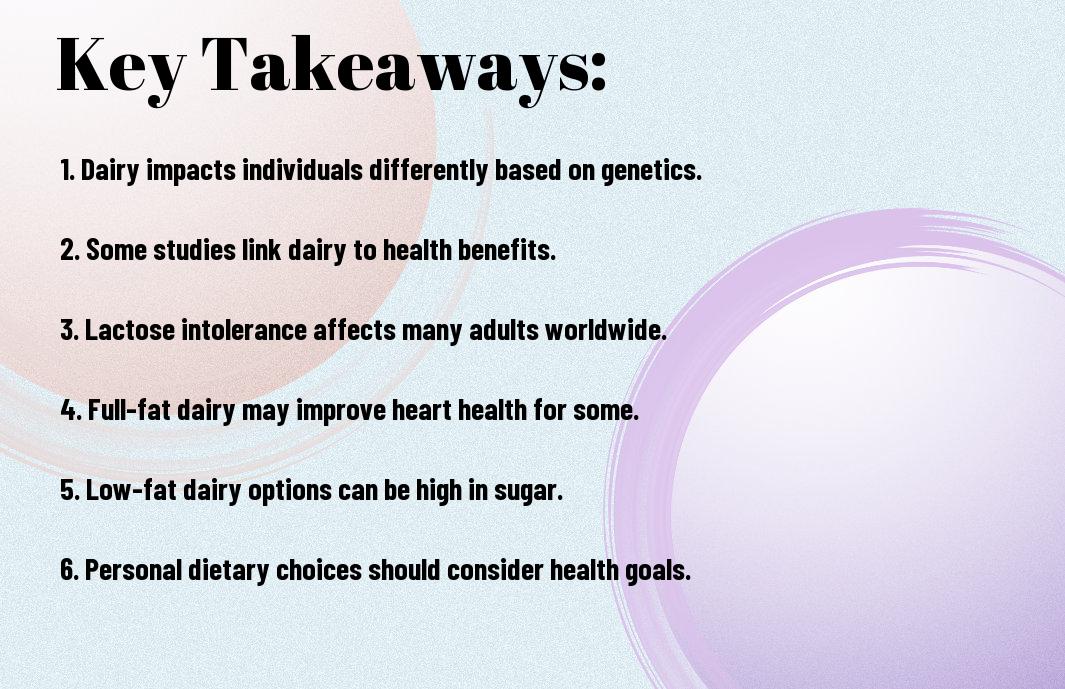
Key Takeaways:
- Dairy Nutrition: Dairy products are rich in vital nutrients like calcium, protein, and vitamin D, contributing to overall health.
- Health Risks: Some studies link high dairy consumption to potential health issues, such as increased risk of certain cancers and lactose intolerance in some individuals.
- Individual Tolerance: Dairy effects can vary widely; some people thrive on dairy while others may face digestive challenges.
- Dietary Balance: Moderation is key; incorporating dairy into a balanced diet can be beneficial without overconsumption.
- Alternatives Available: There are plenty of non-dairy alternatives (like almond and soy milk) that can offer similar nutritional benefits for those who avoid dairy.
The Nutritional Profile of Dairy
To understand the impact of dairy on your health, it’s important to look at its nutritional profile. Dairy products are a significant source of crucial nutrients, including calcium, protein, and vitamins, which contribute to bone health, muscle function, and overall well-being. Including dairy in your diet can help provide these nutrients, but the considerations around consumption may affect your dietary choices.
Essential Nutrients in Dairy
Below are some of the key nutrients found in dairy products. They include calcium, vital for maintaining strong bones, vitamin D for calcium absorption, and high-quality protein that supports muscle growth and repair. Additionally, dairy products often contain other important nutrients like potassium and vitamin B12, contributing to a well-rounded diet.
Potential Negative Components
At the same time, certain components in dairy can lead to potential negative health effects. These include lactose, which may cause digestive issues for some individuals, and saturated fats, which have been associated with heart health concerns when consumed in excess.
Nutrients found in dairy can contribute positively to your overall health, but it’s crucial to consider the negative components as well. For those who are lactose intolerant, dairy can lead to uncomfortable digestive symptoms, while high saturated fat content in full-fat dairy products may raise cholesterol levels if consumed in large quantities. If you find that dairy causes you discomfort or you’re concerned about saturated fats, exploring lactose-free options or dairy alternatives can help you balance your nutritional intake while addressing your health needs.
Common Myths and Misconceptions
Now, the conversation surrounding dairy often involves a variety of myths and misconceptions that can cloud your understanding. Many people assume that all dairy products are inherently unhealthy or that they should be avoided entirely. However, the truth is more nuanced. Not all dairy is created equal, and your individual tolerance and health goals can help guide your choices in dairy consumption.
Dairy and Lactose Intolerance
Intolerance to lactose is a common issue for many individuals, leading to the belief that all dairy products should be excluded from the diet. However, lactose intolerance varies significantly among individuals. Some can tolerate small amounts of lactose, while others may find certain dairy products, like lactose-free milk or fermented options such as yogurt, easier to digest without discomfort.
Dairy as a Cause of Inflammation
Around the debate of dairy’s health impact, the idea that it causes inflammation remains prevalent. Many people link dairy consumption with inflammatory responses in the body, particularly in those with certain health conditions. Yet, the scientific evidence is mixed, suggesting that not all individuals experience inflammation from dairy. Factors such as genetics, overall diet, and lifestyle choices also play a significant role in your body’s inflammatory response.
Further exploring this topic reveals that the relationship between dairy and inflammation is complex. Some studies indicate that dairy might even possess anti-inflammatory properties for certain individuals. The specific type of dairy consumed, the quantity, and the context of your overall diet can all influence how dairy affects you. It’s important to assess your personal experiences with dairy and consult health professionals if you have concerns about inflammation and its connection to your diet.

The Impact of Dairy on Health
Your diet plays a vital role in your overall health, and dairy products are a significant part of many people’s nutrition. Dairy can provide imperative nutrients like calcium, protein, and vitamin D, which contribute to various bodily functions. Nonetheless, the impact of dairy on health is complex, with ongoing debates about its benefits and potential downsides. Understanding these impacts can help you make informed dietary choices.
Benefits for Bone Health
After exploring the nutritional profile of dairy, you may find its benefits for bone health particularly noteworthy. Dairy products are rich in calcium and vitamin D, both imperative for maintaining strong bones and preventing osteoporosis. Including dairy in your diet can support your skeletal system, especially during childhood and adolescence when bone development is critical.
Risks Associated with High Dairy Intake
Between the numerous benefits of dairy, some research warns of potential risks linked to high intake. Overconsumption may contribute to health issues, such as lactose intolerance, digestive discomfort, or even an increased risk of certain diseases. It’s imperative to strike a balance and consider your individual tolerance and health needs.
Due to the varying responses individuals may have to dairy, consuming it in moderation is wise. Some studies have suggested that high dairy intake could be linked to an increased risk of certain cancers, like prostate cancer, and may contribute to cardiovascular problems in susceptible individuals. If you experience digestive issues or are concerned about the potential risks, discussing dietary adjustments with a healthcare professional may be beneficial to tailor your approach to dairy consumption.
Dairy Alternatives: Pros and Cons
All dairy alternatives come with their own set of pros and cons. As you consider switching to these options, it’s important to weigh the benefits against potential downsides. The following table summarizes some key points to help guide your decisions:
Pros and Cons of Dairy Alternatives
| Pros | Cons |
|---|---|
| Lower in saturated fat | May lack certain nutrients found in dairy |
| Lactose-free options available | Some varieties can be high in added sugars |
| Can be more environmentally friendly | Can be more expensive |
| Variety of flavors and types | Some may cause allergies (e.g., nuts, soy) |
| Rich in plant-based nutrients | May have lower protein content |
Plant-Based Milks and Nutritional Comparison
Around the landscape of plant-based milks, there’s significant variation in nutritional content, which is important when considering your dietary needs. The table below provides a comparison of popular options to help you make an informed choice:
Nutritional Comparison of Plant-Based Milks
| Type | Protein (per cup) |
|---|---|
| Almond Milk | 1g |
| Soy Milk | 7g |
| Oat Milk | 2-3g |
| Coconut Milk | 0-1g |
| Rice Milk | 1g |
Environmental and Ethical Considerations
Milks made from plants can offer various environmental benefits, making them appealing to many consumers. You might appreciate the reduced carbon footprint associated with many dairy alternatives compared to traditional dairy farming.
And as you consider your options, it’s worth noting that plant-based milk production typically uses fewer resources, such as land and water, than dairy farming. Moreover, ethical concerns surrounding animal welfare in dairy production have led many consumers to explore plant-based alternatives. By choosing these options, you can feel good about your impact on the planet and animal welfare.
Cultural Perspectives on Dairy Consumption
Not every culture views dairy in the same light. While some societies consume it as a staple part of their diet, others may avoid it due to lactose intolerance or cultural beliefs. Understanding these differing perspectives can provide valuable insights into the ongoing debate about dairy’s health effects. You may find that your own beliefs about dairy are influenced by your cultural background.
Dietary Practices Around the World
Consumption of dairy varies significantly around the globe, with some cultures heavily relying on milk and its products, while others use alternative sources of nutrition. In countries like India and many parts of Europe, dairy is integral to daily meals, whereas in East Asia, a majority of the population is lactose intolerant and subjugates dairy to a minimal role in their diet.
Historical Context of Dairy Use
Across various civilizations, dairy has played a significant role in nutrition and culture. Early agricultural societies began domesticating animals for their milk, leading to the development of dairy products. This historical reliance on dairy transformed dietary practices and established food customs that persist to this day.
The domestication of dairy animals like cows, goats, and sheep significantly influenced human nutrition and societal structures. Initially, people consumed fresh milk, but as agricultural practices evolved, they developed methods to ferment, cheese, and preserve milk, expanding its utility. These innovations allowed dairy to become a vital food source for many, with diverse products tailored to regional tastes and dietary needs. Your understanding of this history can help frame current discussions about dairy’s role in modern diets.
Current Research and Expert Opinions
Unlike the earlier consensus that dairy is universally beneficial, recent studies have highlighted varied perspectives on its impact on health. Current research indicates that dairy consumption may promote both positive and negative health outcomes, depending on individual factors such as genetics, age, and pre-existing health conditions. Experts are divided, with some advocating for the inclusion of dairy as part of a balanced diet, while others caution against potential risks associated with high consumption, particularly in regard to lactose intolerance and saturated fat intake.
Summary of Recent Studies
One noteworthy study found that moderate dairy consumption might be linked to a lower risk of cardiovascular disease, while another suggested that excessive intake could increase the likelihood of certain cancers. Researchers are increasingly focusing on how dairy alternatives may serve as substitutes for those who are lactose intolerant or choose not to consume animal products, suggesting that the debate around dairy is ongoing and complex.
Perspectives from Nutritionists and Dietitians
Recent discussions among nutritionists and dietitians indicate a growing awareness of the varied effects of dairy on health. Some professionals argue that dairy can be beneficial when consumed in moderation, providing important nutrients like calcium and vitamin D. Others suggest that alternative sources may better meet the needs of those who are lactose intolerant or prefer plant-based diets, emphasizing individualized dietary choices.
This ongoing dialogue highlights the complexity of dietary needs and the importance of personalizing your nutritional habits. Many nutrition experts advocate for a balanced approach, encouraging you to listen to your body and consider your unique health requirements. They often recommend consulting with a healthcare provider or dietitian to help determine the best options for your lifestyle, whether that includes dairy or focuses on dairy-free alternatives.
Final Words
Taking this into account, the debate surrounding dairy consumption is multifaceted and personal. Your choice to include or exclude dairy from your diet can depend on factors such as nutritional needs, health conditions, and personal preferences. While dairy can offer benefits like calcium and protein, it may pose risks for those with lactose intolerance or certain allergies. By evaluating your individual circumstances and consulting with a healthcare professional, you can make informed decisions that align with your health goals.
FAQ
Q: Why is there controversy around dairy consumption?
A: The debate surrounding dairy consumption stems from differing opinions on its health effects. Some studies suggest that dairy provides important nutrients like calcium and vitamin D, supporting bone health. Conversely, others argue that dairy can lead to health issues such as lactose intolerance, increased inflammation, and potential links to certain diseases. These conflicting viewpoints contribute to the ongoing discussion about the overall impact of dairy on health.
Q: What are the health benefits of consuming dairy products?
A: Dairy products can be beneficial due to their rich content of nutrients such as calcium, phosphorus, protein, and vitamins A and B12. These elements play a vital role in maintaining healthy bones, teeth, and overall bodily functions. Fermented dairy products, like yogurt, also contain probiotics that can support gut health. Many health experts advocate for moderated dairy intake as part of a balanced diet, particularly for individuals who can comfortably digest these products.
Q: Are there individuals who should avoid dairy altogether?
A: Yes, certain individuals may need to avoid dairy due to lactose intolerance, which leads to digestive discomfort after consuming dairy products. Additionally, people with a milk allergy, which is an immune response to proteins found in milk, should also steer clear of dairy. Some research suggests that individuals with specific health conditions, such as acne or certain types of cardiovascular issues, may benefit from reducing or eliminating dairy from their diet. It’s advisable for those considering dietary changes to consult a healthcare professional for personalized guidance.