With the rising awareness of healthy eating, understanding the glycemic index (GI) can empower you to make smarter food choices. The GI measures how quickly carbohydrates in food raise your blood sugar levels, influencing your energy and appetite. By incorporating low-GI foods into your diet, you can better manage your weight and improve your overall health. In this post, you’ll uncover what the glycemic index is, how it affects your body, and how to use it effectively in your daily meals to enhance your well-being.
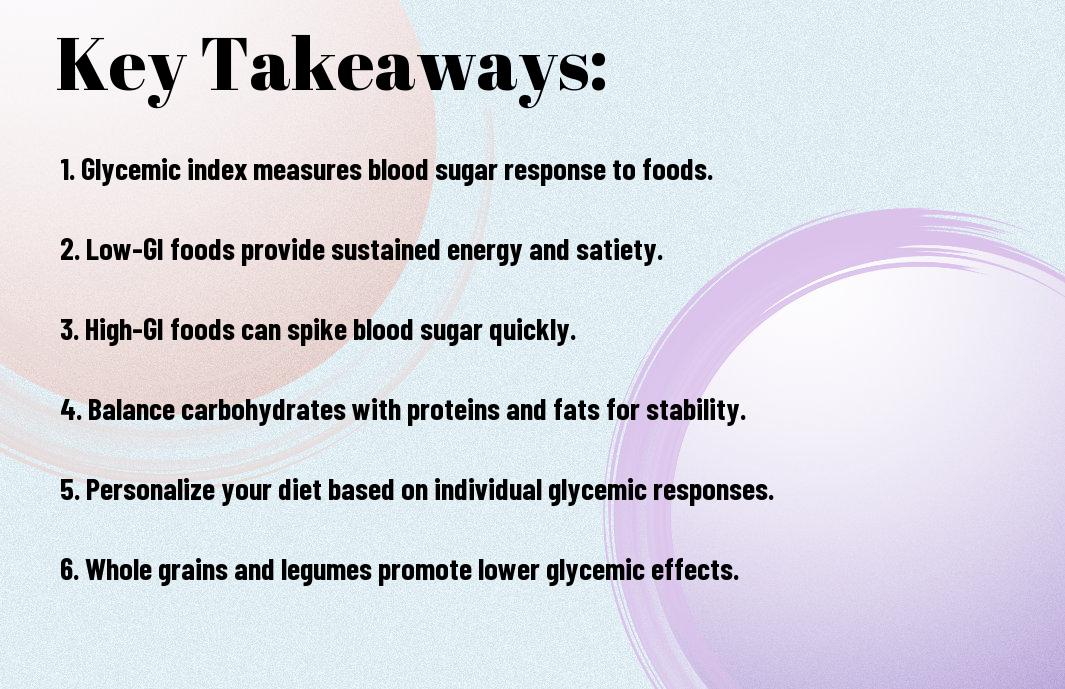
Key Takeaways:
- Glycemic Index (GI): Understanding the GI helps gauge how foods impact blood sugar levels, categorizing them as low, medium, or high.
- Blood Sugar Control: Consuming low-GI foods can aid in maintaining stable blood sugar levels, reducing the risk of spikes and crashes.
- Food Choices: Prioritizing low and medium GI foods, such as whole grains, legumes, and most fruits and vegetables, supports a balanced diet.
- Meal Planning: Combining high-GI foods with low-GI options can improve overall meal effectiveness and nutritional balance.
- Personalization: Individual responses to foods can vary, making it vital to monitor how specific items affect your own blood sugar levels.
What is the Glycemic Index?
To understand the glycemic index (GI), you need to know that it is a ranking system that measures how quickly carbohydrate-containing foods raise your blood sugar levels after consumption. Foods with a high GI are rapidly digested and absorbed, leading to quick spikes in blood sugar, while low GI foods result in more gradual increases. This concept can help you make informed decisions about the foods you include in your diet to maintain stable energy levels and overall health.
Definition and Explanation
Index refers to a scale from 0 to 100, where pure glucose is assigned a value of 100. Foods are categorized based on their effects on blood glucose levels, with those having a GI of 55 or less classified as low GI, 56 to 69 as moderate GI, and 70 or above as high GI. By understanding these classifications, you can tailor your diet to include more low to moderate GI foods, which may help in managing your weight and improving your long-term health.
History and Development
For the development of the glycemic index, researchers in the 1980s aimed to find a better way for diabetics to manage their blood sugar levels through diet. They recognized that not all carbohydrates affect blood sugar in the same way, leading to the creation of the GI. This standardization brought attention to the role of carbohydrate quality in managing diabetes and overall health, resulting in increased interest among nutritionists and health-conscious individuals.
It was during the 1980s that Dr. David Jenkins and his team at the University of Toronto introduced the glycemic index concept. Their research involved testing various foods on human subjects, monitoring the corresponding blood glucose levels for a set period. This pioneering work provided a foundation for understanding how different carbohydrates can influence your body’s glucose response, leading to wider discussions in the nutrition community and the eventual integration of GI principles into various dietary guidelines. As knowledge evolved, the GI has continued to be a relevant tool in personal diet planning and diabetes management.
How the Glycemic Index Affects Blood Sugar
It is important to understand that the glycemic index (GI) measures how quickly carbohydrates in food raise your blood sugar levels. Foods with a high GI cause rapid spikes in blood sugar, while those with a low GI provide a gradual increase. This difference plays a significant role in managing energy levels and overall health, particularly for individuals with diabetes or insulin sensitivity.
Mechanism of Action
An important aspect of the glycemic index is how it interacts with your body’s metabolism. When you consume high-GI foods, your body quickly converts these carbohydrates into glucose, leading to a fast surge in blood sugar levels. This rapid increase triggers your pancreas to release insulin to help transport glucose into your cells for energy, impacting your overall energy and mood throughout the day.
Impacts on Insulin Levels
Below the surface of blood sugar management is the connection between dietary choices and insulin production. Eating high-GI foods not only spikes your blood sugar but also results in a more significant insulin release. This can lead to fluctuations in energy and increased hunger, which might prompt you to consume more calories throughout the day.
At times, frequent consumption of high-GI foods can overwhelm your insulin response, potentially leading to insulin resistance. This means your cells become less responsive to insulin, necessitating even higher insulin levels to manage blood sugar effectively. By opting for low-GI choices, you can promote more stable insulin production and enhance your overall metabolic health.
Glycemic Index Rankings of Foods
Not all foods affect your blood sugar levels in the same way. The Glycemic Index (GI) ranks foods based on how quickly they increase blood glucose levels, classifying them into three main categories: low, medium, and high. Understanding these rankings can help you make informed choices to maintain stable energy levels and overall health.
Low, Medium, and High GI Foods
Medium GI foods have a moderate impact on blood sugar levels, typically falling between 56 and 69 on the index. These foods can be a good option for those looking to balance their energy intake without causing significant spikes in glucose. Incorporating a variety of these foods can contribute to a more stable energy supply throughout your day.
Examples of Common Foods
Beside the general categories, it’s important to identify specific examples of low, medium, and high GI foods. Low GI options include most fruits and vegetables, legumes, and whole grains. Medium GI foods often encompass whole grain bread and brown rice, while high GI foods can be found in sugary snacks and white bread.
Index your diet by incorporating a range of these common foods. For instance, you might find that lentils or chickpeas serve as excellent low GI options for meals, while quinoa and basmati rice fit comfortably into the medium GI category. High GI foods like sugary cereals or white bread can be enjoyed occasionally, but it’s wise to limit their intake for better blood sugar control.
Incorporating the Glycemic Index into Your Diet
Keep in mind that integrating the glycemic index (GI) into your diet can enhance your overall health and help manage your blood sugar levels. Start by focusing on lower GI foods such as whole grains, legumes, fruits, and non-starchy vegetables, while minimizing high GI options like sugary snacks and refined carbohydrates. Transitioning to a balanced diet will provide you with sustained energy and improve your well-being.
Strategies for Meal Planning
Diet planning around the glycemic index involves selecting foods with a lower GI for your meals and snacks. Prioritize whole foods that are minimally processed, and consider batch cooking or preparing meals in advance. Combining proteins and healthy fats with low to moderate GI carbs can also help stabilize your blood sugar levels throughout the day.
Glycemic Index and Weight Management
About weight management, understanding the glycemic index can aid you in making better food choices that support your goals. Choosing foods with a lower GI can help you feel fuller for longer, which may decrease overall calorie intake and improve satisfaction with your meals.
Understanding the relationship between the glycemic index and weight management reveals that foods with a low GI can contribute to weight loss or maintenance by reducing hunger and controlling cravings. When you consume low GI foods, your body releases insulin at a steadier rate, which can help regulate fat storage and promote fat burning. Additionally, you may find it easier to stick to your meal plan, as these foods are often high in fiber and nutrients, ensuring that you feel nourished and energized.

Myths and Misconceptions about the Glycemic Index
After delving into the glycemic index (GI), you may encounter various myths that can cloud your understanding. Many people mistakenly believe that all high-GI foods are unhealthy, while low-GI foods are always beneficial. Additionally, some assume that reducing your GI means eliminating carbohydrates altogether, which isn’t necessary. It’s crucial to separate fact from fiction to make informed dietary choices that truly support your health and well-being.
Common Misunderstandings
Behind the misconceptions surrounding the glycemic index lies a lack of nuance regarding food and its effects on the body. Many individuals equate GI solely with sugar content, overlooking the fact that factors like fiber, fat, and protein can significantly alter how a food impacts your blood sugar levels. This limited perspective may lead to an unbalanced and unsustainable diet.
Evidence-Based Clarifications
Common misunderstandings about the glycemic index can be addressed through scientific evidence. Research shows that the glycemic index is just one aspect of nutrition; it should be considered alongside portion sizes, food combinations, and overall dietary patterns. While low-GI foods can be beneficial, including high-GI foods in moderation can also be part of a healthy diet.
At the heart of evidence-based clarifications is the understanding that the glycemic index should serve as a guide rather than a strict rule. For instance, foods like watermelon and whole-grain bread may have different GI values, yet their nutritional profiles are not just about this measure. Including a variety of foods, focusing on whole grains, fruits, vegetables, and healthy fats, will generally lead to better overall health, regardless of individual GI scores.
The Glycemic Index and Special Dietary Needs
Despite the generalized benefits of the Glycemic Index (GI), understanding its implications becomes even more vital when considering specific dietary needs. Individuals with conditions such as diabetes or those engaged in high-performance sports can tailor their diets by using the GI as a guide. By selecting foods that align with your personal health goals, you can optimize your energy levels, manage your blood sugar, and support your overall well-being.
Diabetic Diets
Between monitoring carbohydrate intake and managing insulin levels, the GI serves as a valuable tool for you if you have diabetes. Foods with a low GI can help stabilize blood sugar levels, making it easier for you to maintain better control over your health. Focusing on low to moderate GI foods can enhance your meal planning and contribute to healthier choices in your daily diet.
Athlete Nutritional Strategies
Around workouts, understanding the glycemic index can significantly impact your performance and recovery. By incorporating foods with varying GI values, you can strategically fuel your body, enhancing endurance and facilitating muscle recovery. This approach helps you to meet the specific energy demands of your athletic lifestyle.
Even more important, in combination with the right training regimen, incorporating a mix of low, moderate, and high GI foods can further optimize your athletic performance. Low GI foods provide sustained energy over time, perfect for prolonged workouts, while high GI foods can offer a quick energy boost immediately post-exercise, aiding recovery. By tailoring your carbohydrate sources based on the timing of your activities, you can enhance your performance and recovery while remaining energized and focused throughout your training sessions.
Summing up
Upon reflecting on the glycemic index, you gain valuable insight into how different foods affect your blood sugar levels and overall health. By incorporating this knowledge into your diet, you can make informed choices that support sustained energy and improved well-being. Understanding the glycemic index empowers you to balance your meals wisely, aligning your food selections with your health goals, whether it’s weight management, enhanced energy, or better metabolic control. By prioritizing low-GI foods, you take a significant step towards a healthier lifestyle.
Q: What is the Glycemic Index and how does it affect my diet?
A: The Glycemic Index (GI) is a ranking system for carbohydrates based on their immediate effect on blood glucose levels. Foods are rated on a scale from 0 to 100, with pure glucose serving as the reference point at 100. Low-GI foods (rated 55 or less) are digested slowly, leading to a gradual rise in blood sugar, which can provide sustained energy. High-GI foods (70 or above) are digested quickly, resulting in rapid spikes in blood sugar, which can lead to energy crashes and increased hunger. Incorporating low to moderate-GI foods into your diet may help maintain stable energy levels and better manage weight.
Q: How can I incorporate the Glycemic Index into my daily meals?
A: To effectively use the Glycemic Index in planning your meals, begin by identifying low and moderate-GI foods. Opt for whole grains like barley and quinoa, legumes like lentils and chickpeas, and non-starchy vegetables like spinach and broccoli. When combining foods, balance high-GI items with proteins or healthy fats to slow digestion. For example, pairing a high-GI food like white bread with avocado can help mitigate its impact on blood sugar. Planning meals that prioritize low-GI choices can promote better energy management throughout the day.
Q: Are there any limitations to using the Glycemic Index in my diet?
A: While the Glycemic Index can be a helpful tool in dietary planning, it has its limitations. The GI of a food can vary based on factors such as how it’s cooked, its ripeness, and the specific variety. Additionally, the GI does not account for portion sizes, meaning a small amount of a high-GI food may not have the same effect as a larger portion. Furthermore, individual responses to carbohydrates can differ, influenced by factors like metabolism and overall health. It’s important to consider the overall nutritional value of foods, including vitamins, minerals, and fiber, rather than focusing solely on their GI rating.