It’s necessary to understand that skipping meals can lead to a variety of health issues. When you forgo food, your body lacks the necessary nutrients, which can cause fatigue, irritability, and even affect your metabolism. You may think you’re saving time or calories, but this habit can lead to overeating later, poor dietary choices, and long-term consequences like weight gain and nutritional deficiencies. In this post, you will learn about the immediate and long-term dangers of skipping meals and why maintaining a regular eating schedule is vital for your health.
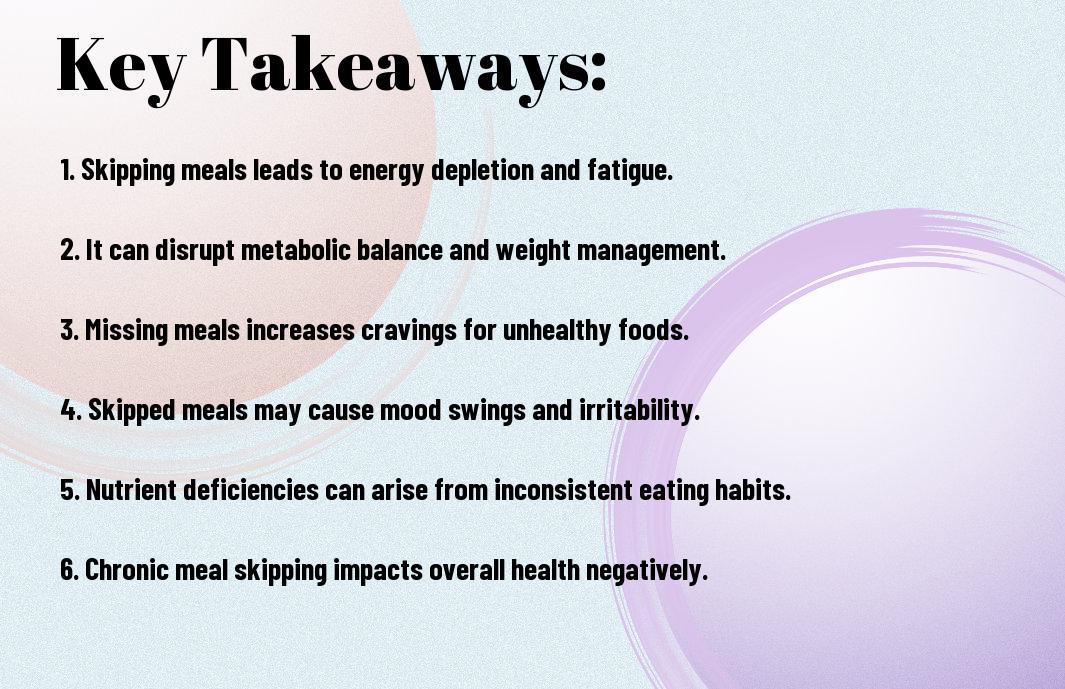
Key Takeaways:
- Metabolic Disruption: Skipping meals can lead to slower metabolism, causing the body to conserve energy and store fat.
- Nutrient Deficiency: Regularly missing meals increases the risk of not getting necessary vitamins and minerals, negatively impacting overall health.
- Increased Cravings: Fasting can result in stronger hunger signals, leading to overeating or unhealthy food choices later on.
Understanding Meal Patterns
Before you can grasp the dangers of skipping meals, it’s necessary to understand meal patterns. Your body thrives on consistency, and the timing and frequency of meals play a significant role in maintaining energy levels, metabolism, and overall health. By recognizing your own eating habits, you can identify the potential pitfalls that come from irregular meal consumption and how they can impact your well-being.
The Importance of Regular Meals
One key aspect of a healthy lifestyle is ensuring that you eat regular meals. Establishing a routine helps your body regulate hunger signals and maintain balanced energy levels. Consistently providing your body with necessary nutrients allows it to function efficiently and decreases the likelihood of overeating later on.
Consequences of Inconsistency
Inconsistency in your meal patterns can lead to a variety of negative side effects. Skipping meals or eating irregularly alters your body’s natural hunger cues, making it difficult for you to recognize actual hunger or fullness. This disorientation can result in binge eating, poor nutritional choices, and increased cravings for unhealthy foods, ultimately impacting your physical and mental health.
Indeed, the repercussions of erratic eating patterns extend beyond immediate hunger pangs. When you skip meals, your blood sugar levels can fluctuate unpredictably, resulting in fatigue, irritability, and decreased cognitive function. Over time, these patterns can disrupt your metabolism, leading to weight gain and increased health risks such as diabetes and heart disease. Prioritizing regular meals helps you stabilize your body’s functions, promoting a healthier, balanced lifestyle.
Physical Effects of Skipping Meals
Some people underestimate the impact that skipping meals has on their bodies. When you skip meals, your body begins to react in ways that can lead to various physical issues, such as fatigue, dizziness, and impaired concentration. These effects can hinder your daily activities and overall quality of life. Sustaining energy levels and maintaining optimal health requires regular nourishment, and neglecting to feed your body may set off a cascade of negative outcomes.
Impact on Metabolism
At the heart of your metabolic process is the balance of energy intake and expenditure. When you skip meals, your body perceives this as a signal of scarcity and subsequently slows down your metabolism to conserve energy. This slowdown can make it harder for you to lose weight, as your body becomes more efficient at storing fat and less effective at burning calories.
Nutritional Deficiencies
Below the surface, skipping meals can lead to a host of nutritional deficiencies that may impact your health over time. Without regular meals, your body lacks the necessary vitamins and minerals needed to function optimally. You might find that you become deficient in nutrients like iron, calcium, and necessary fatty acids, which can compromise your immune system and overall well-being.
To address nutritional deficiencies caused by meal skipping, it’s important to ensure that every meal is well-balanced and packed with nutrients. Focus on incorporating a variety of whole foods, such as fruits, vegetables, lean proteins, and healthy fats, into your diet. By prioritizing nutrient-dense options and making a conscious effort to eat regular meals, you can safeguard your health and avoid the pitfalls associated with inadequate nutrition.
Mental and Emotional Consequences
Not paying attention to meal timing can lead to significant mental and emotional consequences that affect your overall well-being. Skipping meals can create an unstable environment for your mind and body, resulting in difficulties concentrating, increased anxiety, and irritability. When you neglect your body’s nutritional needs, it can manifest in both cognitive and emotional distress.
Cognitive Function Impairment
For many, skipping meals can lead to cognitive function impairment. Without proper nourishment, your brain lacks the energy sources it needs to operate effectively, making it difficult to focus, recall information, or make sound decisions. This can ultimately affect your productivity and overall performance in daily tasks.
Mood Swings and Emotional Health
Beside cognitive challenges, skipping meals often leads to mood swings and deteriorating emotional health. Lack of consistent nourishment can trigger fluctuations in blood sugar levels, resulting in irritability and heightened stress. Your emotional responses can become more intense, leading to conflicts in relationships and impacting your social interactions.
Hence, paying attention to your eating patterns fosters not only physical health but also contributes to emotional stability. You may find that regular meals help smooth out the peaks and troughs of your mood, allowing for a more balanced emotional state. Establishing a routine centered around proper meal timing will support your mental clarity and promote a healthier, happier you.
The Connection Between Skipping Meals and Weight Gain
Despite common belief, skipping meals can actually lead to weight gain rather than weight loss. When you deprive your body of necessary nutrition, it compensates by slowing down your metabolism and increasing hunger signals. This often results in overeating later in the day or making poor food choices, which can contribute to unwanted weight gain over time. Your body instinctively craves calories when food is scarce, making it difficult to achieve your weight management goals.
Misconceptions About Weight Loss
Along your weight loss journey, you might have the misconception that skipping meals is an effective strategy. However, this approach can backfire, as your body needs a consistent intake of nutrients to function optimally. Instead of losing weight, you may find that your body is holding onto fat more than ever, due to the stress and imbalance caused by meal deprivation.
The Rollercoaster Effect on Hunger Hormones
After skipping meals, your body experiences a fluctuation in hunger hormones, leading to a cycle of cravings and overeating. This hormonal imbalance triggers intense hunger pangs, making it challenging to listen to your body’s true needs.
Weight fluctuations can occur as your body reacts to inconsistent meal patterns. When you skip a meal, the levels of ghrelin, the hunger hormone, increase, signaling to your brain that you need food. Subsequently, when you finally eat, your body might produce excess insulin, driving down blood sugar and leading to rapid hunger again. This rollercoaster of hormone levels can keep you in a cycle of hunger and overeating, making it difficult to establish a balanced eating routine. Consistent meals can stabilize these hormone levels, promoting a healthier relationship with food.

Strategies for Maintaining Regular Meal Times
Unlike the chaos of a busy lifestyle, establishing regular meal times can enhance your overall well-being. To help you stay consistent, consider setting alarms as reminders, creating a meal schedule, and avoiding skipping meals when possible. By prioritizing these practices, you can cultivate healthier habits and enjoy meals without the stress of irregular eating patterns.
Meal Planning Tips
Any effective meal strategy starts with planning. Here are some helpful tips to consider:
- Designate a specific day for meal prep.
- Incorporate a variety of foods for balanced nutrition.
- Create a shopping list to avoid impulse purchases.
- Prepare snacks to curb hunger between meals.
After implementing these tips, you’ll find that maintaining regular meal times becomes a more manageable task.
Mindful Eating Practices
Mindful eating allows you to develop a deeper connection with your food. Take the time to appreciate the colors, textures, and flavors of your meals, as this can enhance your overall eating experience. By focusing on the present moment and savoring each bite, you are more likely to listen to your body’s hunger signals and avoid overeating. This practice encourages awareness of portion sizes and helps you avoid distractions while eating.
Hence, by practicing mindful eating, you can foster a healthier relationship with food, making it easier for you to maintain regular meal times and enjoy the benefits of proper nourishment. You’ll notice improvements in digestion, satisfaction, and overall wellness as you embrace this intentional approach to eating.
Special Considerations
Now, when considering the dangers of skipping meals, it’s important to recognize individual differences that may affect your health and well-being. Factors such as age, dietary needs, and existing medical conditions can significantly impact how missed meals affect your body. Understanding these variations can help you better navigate your eating habits and promote a healthier lifestyle.
Skipping Meals in Different Age Groups
Along different stages of life, skipping meals can have varying effects on your body. Young individuals may face impaired growth and energy levels, while adults may experience decreased productivity and mood fluctuations. Older adults may struggle with nutrient deficiencies and weakened immune function as a result of inconsistent meal patterns, underscoring the need for balanced nutrition tailored to your age group.
Dietary Needs and Medical Conditions
At any age, dietary needs and medical conditions play a significant role in how meal patterns affect your health. Individuals with diabetes, for example, need to maintain regular meal schedules to manage blood sugar levels effectively. Similarly, those with gastrointestinal disorders may experience discomfort when meals are skipped, leading to further complications. Tailoring your meal timing and composition to your unique health requirements is crucial for optimal well-being.
Medical conditions can drastically alter how your body responds to meal timing. For individuals with conditions such as hypertension or heart disease, consistent meal patterns can help stabilize blood pressure and maintain heart health. On the other hand, if you have food allergies or intolerances, skipping meals may result in bingeing on unsuitable foods later, exacerbating your health issues. Understanding your specific dietary needs is key to preventing complications related to missed meals and ensuring that you maintain a healthy relationship with food.
To wrap up
Following this discussion on the dangers of skipping meals, it’s important to acknowledge how such habits can disrupt your metabolism, lead to nutritional deficiencies, and negatively affect your mental health. When you forgo meals, you may experience fatigue, irritability, and decreased concentration, impacting your overall well-being and productivity. Prioritizing regular meals can help support your energy levels and maintain a balanced diet, ultimately contributing to a healthier lifestyle.
Q: What are the immediate effects of skipping meals on the body?
A: Skipping meals can lead to a variety of immediate physical and mental effects. Physically, it may result in decreased energy levels, increased hunger, and difficulty concentrating. As your blood sugar levels drop, you may experience headaches, irritability, and fatigue. Mentally, your cognitive performance can suffer, making it harder to focus and make decisions. These effects can hinder your productivity and overall well-being throughout the day.
Q: How does skipping meals impact long-term health?
A: Consistently skipping meals can contribute to long-term health issues, including metabolic problems and weight gain. When meals are regularly missed, the body may enter a state of starvation, slowing down metabolism to conserve energy. This can lead to unhealthy eating patterns, such as binge eating during subsequent meals, which may result in weight gain. Additionally, chronic skipping of meals can increase the risk for conditions like diabetes and heart disease due to poor nutrient intake and unstable blood sugar levels.
Q: What strategies can help avoid the negative effects of skipping meals?
A: To avoid the adverse effects of skipping meals, consider several strategies to maintain consistent energy levels and healthy eating habits. Firstly, plan meals ahead of time and include easy, nutritious snacks to keep on hand for busy days. Staying hydrated is also important, as drinking water can help curb hunger. Setting reminders to eat at regular intervals can ensure meals are not overlooked. Finally, focus on balanced meals that include a variety of food groups to provide necessary nutrients and sustained energy throughout the day.