Many individuals overlook the importance of how they eat, but incorporating mindful eating practices can significantly enhance your overall well-being. By focusing on the experience of eating, you foster a deeper connection with your food, leading to better digestion, improved emotional health, and more satisfying meals. This blog post will explore the various benefits of mindful eating, providing you with practical tips to transform your relationship with food and cultivate a more balanced lifestyle.
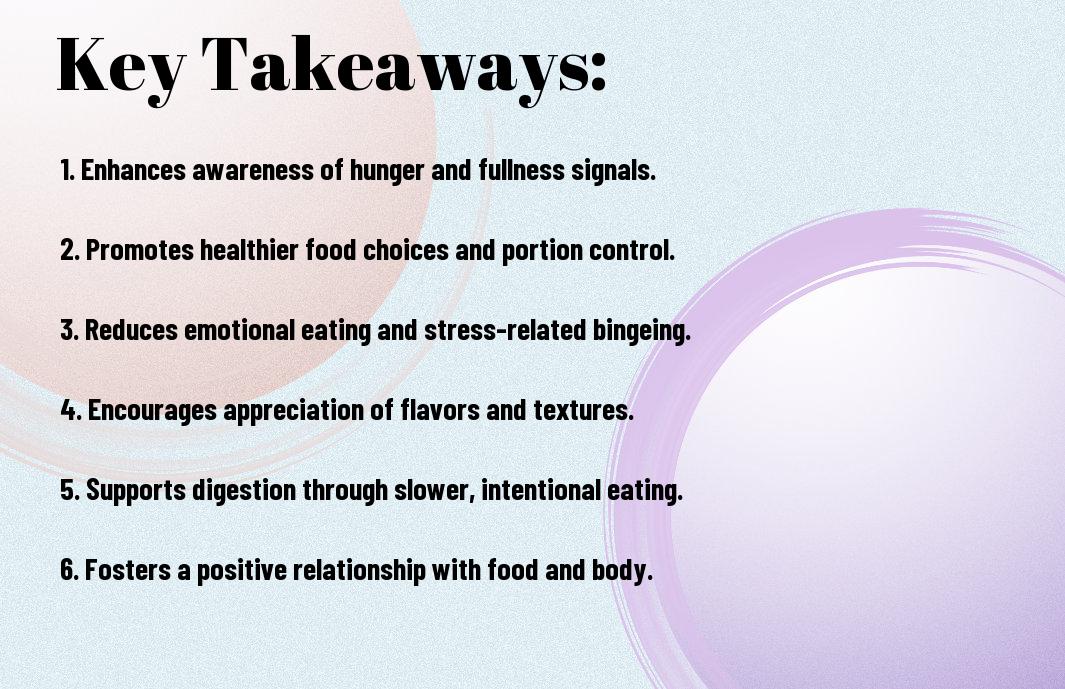
Key Takeaways:
- Improved Digestion: Mindful eating promotes awareness of hunger and fullness cues, leading to better digestion and absorption of nutrients.
- Emotional Well-being: Focusing on the eating experience can reduce emotional eating, helping individuals develop a healthier relationship with food.
- Enhanced Enjoyment: Taking the time to savor each bite can increase overall satisfaction and enjoyment from meals.
- Weight Management: Practicing mindful eating may assist in weight control by encouraging thoughtful food choices and reducing overeating.
- Increased Awareness: Being present during meals fosters a deeper awareness of food quality and choices, promoting healthier decisions.
Understanding Mindful Eating
A mindful eating practice encourages you to be present during meals, enhancing your relationship with food. It involves focusing on the sensory experience of eating—taste, texture, aroma, and appearance—while also paying attention to your hunger and satiety cues. By cultivating awareness, you can make more informed choices about what and how you eat, steering clear of mindless habits that often lead to overeating or unhealthy food choices.
Definition and Principles
Along with being present, the principles of mindful eating include acknowledging your feelings towards food, engaging all your senses while eating, and recognizing physical hunger and satiety cues. This practice allows you to enjoy your meals fully, promoting a healthier relationship with food and improving your overall well-being.
Historical Context
Across various cultures and traditions, there have been practices that encourage awareness during meals. Mindful eating has roots in Buddhist teachings that emphasize mindfulness as a way of life. This concept has gained popularity in the West as people seek healthier lifestyles and improved mental health, integrating ancient wisdom with modern nutritional science.
Considering the historical context, mindful eating can be traced back thousands of years, especially in Eastern practices where food was not only a source of nourishment but also a means of spiritual awakening. Today, as you seek balance in your life amidst a fast-paced world, mindful eating offers a way to reconnect with your body and food on a deeper level, revitalizing age-old traditions for contemporary needs.
Physical Health Benefits
The practice of mindful eating significantly influences your physical health. By fostering a deeper connection with the food you consume, you nurture your body, enhance nutrient absorption, and support your overall well-being. This approach encourages you to prioritize quality meals, promoting healthier food choices that benefit your physical condition and energy levels.
Weight Management
Benefits of mindful eating in weight management are profound. By staying attuned to your hunger and fullness cues, you can make informed decisions about portion sizes, helping you avoid overeating. This practice allows you to foster a healthier relationship with food, ultimately contributing to sustainable weight loss and maintenance.
Improved Digestion
On the topic of improved digestion, mindful eating plays a vital role. When you eat mindfully, you chew your food thoroughly and take your time to savor each bite. This practice not only aids in breaking down food for better nutrient absorption but also minimizes digestive discomfort. By reducing stress during meals and eating at a slower pace, you allow your digestive system to function more effectively, promoting overall digestive health.
Health professionals recommend mindful eating as a strategy to enhance digestive efficiency. When you focus on your food without distractions, you are more likely to notice when you are full and reduce the tendency to indulge in unhealthy foods. Additionally, chewing your food longer increases saliva production, facilitating the digestion process. This conscious approach to eating can alleviate issues such as bloating, gas, and indigestion, ultimately leading to a happier, healthier gut.

Psychological Benefits
Now, embracing mindful eating can significantly improve your mental well-being. By focusing on your meals and savoring each bite, you quiet the noise of daily life, allowing yourself to enjoy your food without distractions. This practice enhances your self-awareness, fostering a deeper connection with your emotional states and helping you understand the triggers that may drive unhealthy eating habits.
Reduced Stress and Anxiety
On engaging with your food mindfully, you may find that it helps to lower stress and anxiety levels. The act of slowing down and tuning into your senses allows you to cultivate a peaceful eating environment. By giving yourself the space to enjoy your meals, you’ll likely notice an immediate reduction in overwhelming thoughts, leading to an overall sense of calm.
Enhanced Relationship with Food
Food can be a source of joy and nourishment when approached mindfully. By practicing mindful eating, you shift from viewing meals as mere fuel to appreciating them as experiences that nourish both your body and mind. With this perspective, you learn to listen to your body’s needs, making choices that align with your lifestyle and priorities. By savoring your meals without guilt or restriction, you’ll cultivate a more harmonious and rewarding relationship with food.
And as you deepen your understanding of your eating habits, you begin to appreciate the flavors, textures, and colors of the food you consume. This awareness encourages you to choose meals that truly satisfy you, transforming the way you engage with food. Ultimately, you pave the way for healthier eating patterns free from guilt and anxiety, fostering a sense of fulfillment and satisfaction with every meal.
Social and Environmental Impact
Once again, adopting mindful eating practices not only enhances your personal experience but also has a profound impact on society and the environment. By being more aware of your food choices, you contribute to reduced food waste, support local farmers, and encourage sustainable agriculture. As you make thoughtful decisions about what you consume, you help foster a community that values nutritious, wholesome foods, ultimately benefiting both your health and the planet.
Mindfulness in Shared Meals
An necessary aspect of mindful eating is the opportunity it provides to enhance your shared meals. When you eat with others mindfully, you engage more meaningfully, fostering connections and conversations that enhance your overall dining experience. By appreciating each taste and texture, you can cultivate a deeper appreciation for the cultural and emotional significance of the food being shared.
Sustainable Eating Practices
An important facet of mindful eating is embracing sustainable eating practices. By being mindful of the sourcing and production of your food, you can make choices that support environmental health. This approach encourages you to choose seasonal, local, and organic options, and reduces your carbon footprint associated with food transportation.
In fact, sustainable eating practices empower you to contribute positively to the environment. By prioritizing foods that are in season and grown locally, you help reduce the need for transportation and refrigeration, significantly lowering greenhouse gas emissions. Additionally, choosing organic foods often means supporting farming methods that are better for the soil and water systems. As you adopt these practices, you not only enhance your health but also play a part in ensuring a healthier planet for future generations.
Practical Tips for Mindful Eating
Not every meal needs to be a rushed experience. To incorporate mindful eating into your routine, consider these tips:
- Slow down and chew your food thoroughly.
- Eliminate distractions during meals, such as screens and loud environments.
- Pay attention to your hunger and fullness cues.
- Savor the flavors, textures, and aromas of your food.
This practice can enhance your relationship with food and promote health.
Techniques to Get Started
Along your mindful eating journey, try starting each meal by taking a few deep breaths to center yourself. Set an intention for your meal and appreciate your food, considering where it came from and the effort that went into preparing it. Use smaller plates to help control portion sizes and encourage mindfulness.
Overcoming Common Challenges
Against the backdrop of a busy lifestyle, you may face obstacles while practicing mindful eating. It can be difficult to find time to focus on your meals in a fast-paced world.
Common challenges include distractions from technology, emotional eating triggers, and the habit of eating on the go. To overcome these, establish specific meal times and designate a quiet space for eating. You might also benefit from journaling your feelings about food and identifying emotional triggers. Learning to pause before eating can help you choose your meals more thoughtfully. The key is to approach these challenges with a growth mindset and be patient with yourself as you cultivate mindfulness.
Mindful Eating and Nutrition
Unlike traditional eating habits, mindful eating emphasizes the importance of being present during meals, allowing you to better understand your body’s nutritional needs. By practicing mindful eating, you can enhance your relationship with food while reaping mindful eating benefits and how to practice mindfulness in your daily routine. This approach encourages you to savor your meals, making it easier to recognize what your body really craves, ultimately leading to healthier nutrition choices.
The Role of Nutrition in Mindfulness
Beside promoting a greater awareness of your eating habits, nutrition also plays an important role in how you feel and function throughout the day. By focusing on nutrient-dense foods, you can nourish your body and enhance your overall well-being, making it easier to practice mindfulness consistently. A balanced diet fuels your physical and mental performance, enabling you to be more present during meals.
Choosing Nutrient-Rich Foods
Between processed snacks and fresh produce, the choices you make regarding your diet directly affect your mindfulness experience. Opting for nutrient-rich foods not only supports your physical health but also enhances your mental clarity, allowing you to engage more fully in the practice of mindfulness while eating.
Role of mindful eating in choosing nutrient-rich foods lies in the focus and awareness you bring to each meal. By consciously selecting foods that offer maximum nutrition, you empower yourself to understand what your body truly needs versus what might be simply satisfying in the moment. Explore whole grains, fruits, vegetables, and lean proteins to nourish your body extensively. This intentional approach allows you to cultivate better habits and promotes overall wellness, leading to an enriched, mindful eating experience.
Conclusion
On the whole, adopting mindful eating habits can significantly enhance your relationship with food and improve your overall well-being. By focusing on the flavors, textures, and sensations of your meals, you empower yourself to make healthier choices and cultivate a greater appreciation for what you consume. This practice not only promotes better digestion and satisfied cravings but also fosters emotional awareness around eating. Incorporating mindful eating into your daily routine can lead to a more balanced diet and a happier, healthier lifestyle.
FAQ
Q: What is mindful eating, and how does it differ from regular eating?
A: Mindful eating is the practice of being fully present and engaged while eating, paying attention to the experience of food, its flavors, textures, and the sensations it brings. Unlike regular eating, which can often be distracted or hurried, mindful eating encourages individuals to slow down, savor each bite, and observe their hunger and satiety cues. This approach promotes a more conscious relationship with food, enhancing appreciation and reducing the likelihood of overeating.
Q: What are some of the emotional benefits of practicing mindful eating?
A: Practicing mindful eating can significantly improve emotional well-being. By fostering a deeper connection with food, individuals may find they experience less guilt or anxiety around eating. This practice helps cultivate self-compassion and awareness, allowing for a more positive food relationship. Furthermore, being present during meals can aid in stress reduction, as it encourages individuals to focus on the moment rather than on external distractions or worries.
Q: How can adopting mindful eating habits influence my physical health?
A: Adopting mindful eating habits can have a positive impact on physical health through better digestion, improved nutrient absorption, and potential weight management. By paying attention to hunger cues and eating at a slower pace, individuals may be less likely to overeat, thus helping to maintain a healthy weight. Additionally, mindful eating can enhance the enjoyment of food, which can lead to healthier choices and a greater focus on nutrient-dense options, ultimately benefiting overall health.