You may find yourself wondering which diet approach—low-carb or low-fat—best aligns with your health goals. Each diet offers distinct benefits and challenges, making it imperative to understand how they work, what they promote, and how your lifestyle might factor into your choice. In this post, we will explore the key differences between low-carb and low-fat diets, helping you make an informed decision that suits your personal preferences and health objectives.
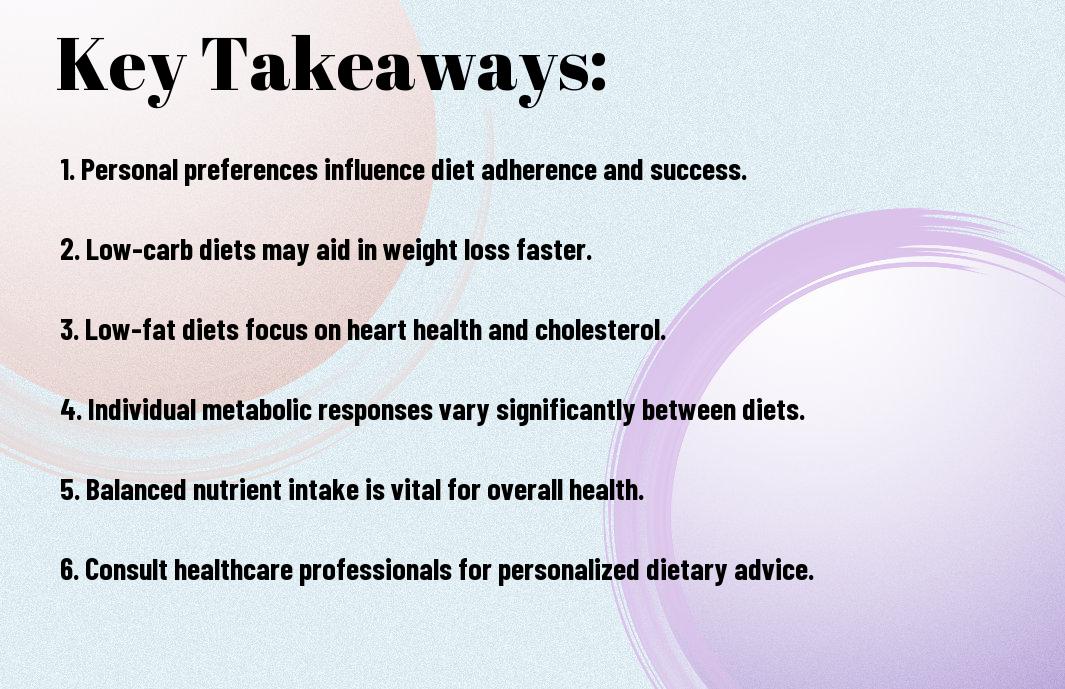
Key Takeaways:
- Individual Preferences: Choosing between a low-carb and low-fat diet depends on your personal preferences, lifestyle, and how your body responds to different macronutrients.
- Weight Loss: Both diets can effectively promote weight loss, but sustained success often relies on adherence and lifestyle compatibility rather than the inherent quality of the diet itself.
- Nutrient Balance: It’s imperative to ensure that your chosen diet maintains a balanced intake of nutrients; focusing solely on fat or carbs may lead to deficiencies.
- Health Effects: Each diet may have different impacts on cholesterol levels, heart health, and blood sugar control, so consulting with a healthcare professional can offer personalized guidance.
- Long-Term Sustainability: Consider which diet you believe you can maintain over the long term, as sustainability is key to achieving lasting health benefits.
Understanding Low-Carb Diets
To navigate the world of diets, it’s important to understand what low-carb diets entail. These dietary plans significantly reduce carbohydrate intake, replacing it with proteins and healthy fats. By limiting carbs, your body enters a state called ketosis, where it turns to fat for energy instead of glucose, potentially aiding in weight management and improved metabolic health.
Definition and Principles
Around low-carb diets, the main principle revolves around the drastic reduction of carbohydrate sources, such as bread, pasta, and sugars. Instead, you’ll focus on consuming protein-rich foods, including meats, fish, eggs, and healthy fats, along with non-starchy vegetables. This shift aims to alter your body’s energy source and improve overall health.
Potential Benefits and Risks
Benefits of following a low-carb diet include enhanced weight loss, better appetite control, and improved blood sugar levels. However, it’s vital to be aware of potential risks, such as nutrient deficiencies and the possibility of experiencing fatigue during the transition period.
In fact, while low-carb diets can lead to rapid weight loss and improved blood sugar control, they may also come with challenges. Some individuals might experience side effects such as headaches, fatigue, and digestive issues as their bodies adapt to a lower carb intake. Additionally, restricting certain food groups can lead to nutritional imbalances if not properly managed. It’s important to evaluate your personal health needs and consult with a healthcare professional to ensure a balanced approach when considering a low-carb lifestyle.
Understanding Low-Fat Diets
If you’re considering a low-fat diet, it’s necessary to understand its core principles and how it works. Low-fat diets focus on reducing your intake of fats, particularly saturated fats, and emphasize the consumption of fruits, vegetables, whole grains, and lean proteins. This strategy aims to lower calorie intake while promoting overall health, potentially aiding in weight loss and reducing the risk of chronic diseases.
Definition and Principles
Any low-fat diet typically advocates for limiting total fat intake, often suggesting that fats should account for less than 30% of your total daily calories. You’ll find that these diets encourage replacing high-fat foods with lower-fat alternatives, which can help you manage your weight and improve your cholesterol levels, guiding you to healthier eating habits.
Potential Benefits and Risks
About the potential benefits of low-fat diets, they usually include weight loss, improved heart health, and lower cholesterol levels. However, it’s necessary to acknowledge that not all fats are detrimental; some healthy fats play a critical role in your diet. Risks may include nutrient deficiencies or an over-reliance on processed low-fat foods, which can be high in sugars or artificial additives.
Consequently, when opting for a low-fat diet, it’s vital to focus on the quality of the fats you consume. Incorporating healthy fats such as those from avocados, nuts, and fish is beneficial. Failing to do so may lead you to lose out on necessary nutrients, affecting your overall health. Consider consulting a healthcare or nutrition professional to create a balanced approach that meets your individual needs while maximizing the benefits of a low-fat diet.
Comparing Weight Loss Outcomes
Not all diets produce the same results when it comes to weight loss. Understanding how low-carb and low-fat approaches compare can help you choose the best option for your lifestyle. Below is a breakdown of their weight loss outcomes:
Weight Loss Outcomes
| Diet Type | Weight Loss Potential |
|---|---|
| Low-Carb | Rapid initial weight loss due to water loss |
| Low-Fat | Gradual, sustainable weight loss from caloric deficit |
Short-Term Results
Against the backdrop of quick fixes, low-carb diets often produce faster weight loss initially, primarily attributed to a reduction in water weight. If you’re seeking rapid results for an upcoming event, a low-carb plan may appear more appealing. However, it’s necessary to evaluate whether this strategy meets your long-term health goals.
Long-Term Sustainability
Comparing the longevity of each diet, low-fat diets tend to offer better long-term sustainability. A balanced approach that incorporates a variety of food groups is often easier to maintain over time and can lead to lasting lifestyle changes, helping you avoid the yo-yo effect often seen with more restrictive diets.
But it’s important to focus on what works for your unique body and preferences. While a low-fat diet can be sustainable, creating a personalized approach that you can maintain is vital. As you evaluate these plans, consider not just the weight loss but also how each method fits into your lifestyle and overall health. Choose a path that you can sustain for the long haul.
Nutritional Considerations
All diets come with unique nutritional considerations that can impact your health. Understanding macronutrient ratios and micronutrient content is vital when choosing between low-carb and low-fat approaches. Your individual health goals and preferences will dictate which nutritional pathway is the best fit for your lifestyle.
Macronutrient Composition
An effective diet hinges on its macronutrient composition, which determines your body’s energy source. Low-carb diets primarily focus on reducing carbohydrate intake while emphasizing proteins and healthy fats. In contrast, low-fat diets limit fat consumption and often increase carbohydrate intake from whole foods, including fruits and grains, catering to your dietary needs.
Micronutrient Adequacy
Across both dietary frameworks, ensuring adequate micronutrient intake is vital for your overall well-being. Each diet can present challenges in meeting your daily vitamin and mineral requirements, which could affect your energy levels and health outcomes. Tailoring your food choices is necessary to provide the micronutrients your body needs.
Another important aspect of maintaining micronutrient adequacy is the quality of the foods you choose. Low-carb diets might lack certain vitamins and minerals typically found in whole grains, fruits, and legumes. Conversely, low-fat diets may result in insufficient healthy fats that promote the absorption of fat-soluble vitamins. Be proactive in incorporating a variety of nutrient-dense foods to meet your micronutrient needs regardless of the diet you choose.

Lifestyle Compatibility
Once again, when considering low-carb versus low-fat diets, it’s important to assess how each aligns with your lifestyle. The best diet for you is one that fits seamlessly into your daily routine, whether that’s meal prep, dining out, or maintaining social engagements. Evaluating factors like your work schedule, family dynamics, and food preferences will help you make an informed choice that you can sustain over time.
Social and Eating Out Challenges
Across social situations, sticking to a low-carb or low-fat diet can present unique challenges. Whether you’re attending a party, dining at a restaurant, or enjoying gatherings with friends, understanding how each diet impacts your social life is imperative. You may find it easier to scan menus for lower-fat options in some settings, while in others, prioritizing low-carb dishes might align better with your dietary goals.
Individual Preferences and Adherence
On a personal level, your food preferences significantly influence your ability to adhere to a specific diet. The likelihood of maintaining a long-term diet often hinges on how much you enjoy the foods within that framework, as well as how well they meet your nutritional needs.
For instance, if you have a strong preference for carbs, such as bread, pasta, and fruits, a low-fat diet may feel more satisfying and sustainable for you. Conversely, if you enjoy meat, cheese, and healthy fats, a low-carb diet might suit your tastes better. Aligning your diet with your individual preferences will be key to not only starting a program but also successfully sticking with it in the long run.
Making the Right Choice for You
Keep in mind that selecting the right diet for yourself requires a thoughtful examination of your lifestyle, preferences, and health goals. Both low-carb and low-fat diets can be effective, but it’s vital to choose a plan that you can adhere to long-term without feeling deprived. Personalizing your approach can enhance your diet’s sustainability, ultimately leading to better health outcomes.
Assessing Health Goals
One of the first steps in making your decision is to assess your health goals comprehensively. Are you focused on weight loss, managing blood sugar, improving heart health, or increasing your overall energy? Identifying your primary objectives will guide you towards the most suitable dietary approach, making it easier to stay on track.
Consulting with Healthcare Professionals
Any dietary change should ideally be discussed with healthcare professionals who can provide personalized advice based on your unique health status.
Also, consulting with a registered dietitian or a healthcare provider can provide you with valuable insights into your dietary needs. They can help assess your current health conditions, recommend appropriate dietary patterns, and guide you on how to effectively implement your chosen diet. Tailoring your approach with professional guidance ensures that you are making informed decisions that are safe and effective for your individual circumstances.
Conclusion
To wrap up, choosing between a low-carb or low-fat diet depends on your personal health goals, lifestyle, and preferences. Both diets have their benefits, and understanding how they impact your body can help you make an informed decision. It’s important to assess what works best for you individually. For more insight into how these diets can affect you in middle age, check out this article on Low carb vs low fat diets? What is better in middle age?.
FAQ
Q: What are the main differences between low-carb and low-fat diets?
A: The main differences between low-carb and low-fat diets lie in their macronutrient compositions. A low-carb diet significantly reduces carbohydrate intake, often encouraging the consumption of proteins and fats instead. This approach aims to promote fat burning and improve insulin sensitivity. In contrast, a low-fat diet focuses on limiting fat intake, often emphasizing carbohydrates and proteins. It aims to reduce overall calorie consumption by cutting higher-calorie fat sources. Additionally, low-carb diets may lead to quicker weight loss at the beginning, while low-fat diets can be easier to sustain for some individuals long-term.
Q: Which diet is more effective for weight loss?
A: The effectiveness of a low-carb versus a low-fat diet for weight loss can vary from person to person. Studies have shown that both diets can lead to weight loss when followed properly. However, low-carb diets often result in more rapid initial weight loss due to water loss and reduced appetite. Over the long term, the difference in weight loss may diminish, as individual adherence to the diet plays a significant role. Ultimately, the best diet for weight loss is one that fits an individual’s lifestyle, preferences, and health needs, encouraging them to stick with it.
Q: How do I choose between a low-carb and low-fat diet?
A: Choosing between a low-carb and low-fat diet depends on personal preferences, lifestyle, and specific health goals. Consider factors like food preferences, how your body reacts to different macronutrients, and any underlying health conditions. If you enjoy foods rich in healthy fats, a low-carb diet might suit you. Conversely, if you prefer grains, fruits, and vegetables and have no issues with fats, a low-fat diet may be more appealing. Consulting with a healthcare professional or nutritionist can provide personalized recommendations tailored to your unique circumstances.