Many people overlook the effects of their eating habits on weight management. By understanding the science of eating slowly, you can make meaningful changes to your dietary routine. This practice not only allows your brain to better register fullness but also encourages mindful eating, helping you to savor each bite and ultimately reduce your calorie intake. In this post, we will explore the benefits of slowing down during meals and how it can support your weight loss journey effectively.
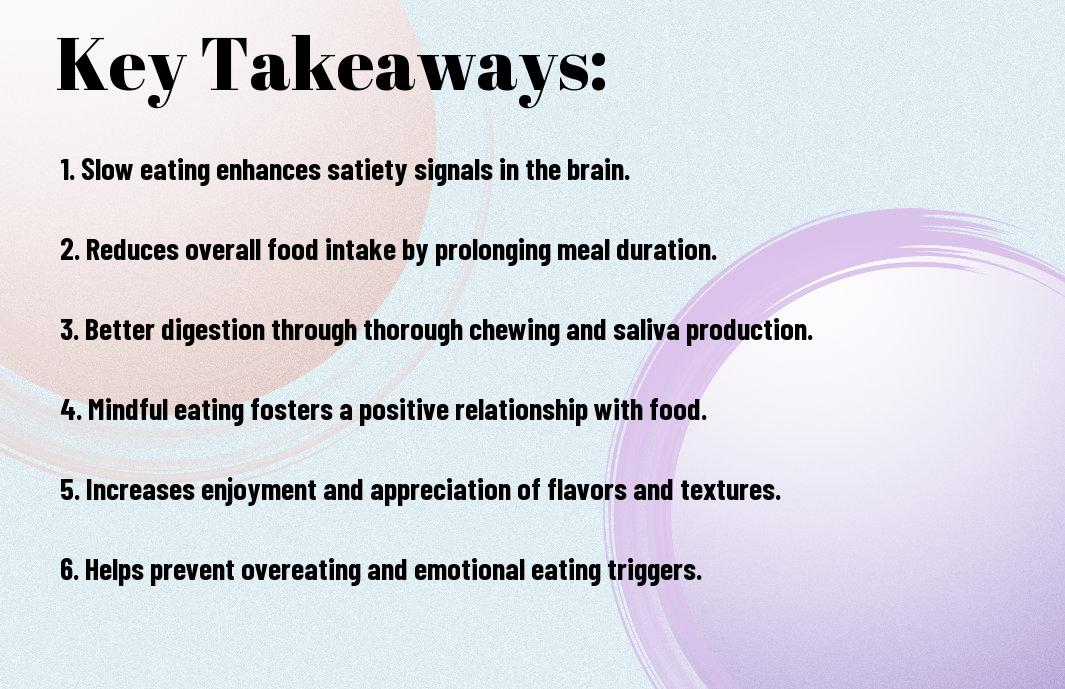
Key Takeaways:
- Mindfulness: Eating slowly encourages mindful eating, allowing you to savor each bite and better recognize your body’s hunger signals.
- Digestion: Slower eating aids in better digestion, as it allows saliva to break down food more effectively before it reaches the stomach.
- Satiety: By taking your time, you are more likely to feel satisfied with smaller portions, reducing the likelihood of overeating.
- Enjoyment: Eating slowly enhances the overall enjoyment of your meal, making it a more pleasurable experience rather than a rushed chore.
- Eating Habits: Developing a habit of eating slowly can lead to long-term weight loss strategies and healthier lifestyle choices.
The Physiology of Eating
For many people, understanding the physiology of eating is key to making healthier choices. When you eat, your body engages in complex processes that influence your digestion and metabolism. Eating slowly allows you to tune in to these physiological responses, aiding in better digestion and ultimately promoting your weight loss efforts. The manner in which you eat can significantly impact how your body reacts to food and its nutritional benefits.
Digestive Process
After you take your first bite, the digestive process begins in your mouth, where enzymes in saliva start breaking down food. As you chew slowly, you prepare your food for easier digestion in the stomach and intestines. This thorough process enhances nutrient absorption and can help prevent issues like bloating or indigestion, allowing you to feel more comfortable and satisfied after meals.
Hormones and Satiety
Around the same time that your food enters your digestive system, your body releases hormones that signal hunger and fullness. Taking your time while eating allows these hormones, such as ghrelin and leptin, to communicate effectively with your brain, letting you know when you’re satisfied and should stop eating. This response typically takes about 20 minutes, demonstrating why eating quickly can lead to overeating.
Consequently, when you eat mindfully and slowly, you give your body the chance to acknowledge when it’s reached a state of satiety. This hormonal feedback loop helps you differentiate between genuine hunger and emotional eating, guiding you toward more appropriate portion sizes. By respecting this natural rhythm, you can make healthier eating decisions and achieve better weight management over time.
The Psychological Aspect of Eating Slowly
Some studies indicate that eating slowly can significantly enhance your psychological relationship with food. When you take your time, you cultivate a sense of awareness about what you’re consuming, allowing you to savor flavors and textures. This practice can promote a deeper connection between your mind and body, helping you to better recognize hunger and satiety cues, ultimately leading to healthier eating habits.
Mindful Eating
After you adopt the practice of eating slowly, you may find that your mind becomes more attuned to the experience of eating. Mindful eating encourages you to focus fully on your meal, paying attention to every bite, which enhances your overall appreciation of food. This awareness can help reduce cravings and improve satisfaction, allowing you to enjoy smaller portions while feeling content.
Reducing Emotional Eating
Any attempt to manage emotional eating can be greatly aided by eating slowly. When you pause to chew and enjoy your food, you create a moment of reflection that may prevent mindless eating triggered by stress or boredom. This simple change can empower you to make conscious choices about what and how much you eat, rather than reaching for food as a means of coping.
Psychological factors can often govern your relationship with food, leading to habitual emotional eating. By slowing down during meals, you create a buffer against the impulse to eat due to emotions rather than hunger. This intentional practice allows you to process your feelings more effectively, often leading to healthier coping mechanisms. Over time, you may find that you’re less reliant on food for emotional support, enabling you to maintain a balanced approach to eating and overall well-being.
Benefits of Slowing Down
Despite the fast pace of modern life, taking time to eat slowly can provide numerous advantages for your overall well-being. Not only does it help promote weight loss, but it also fosters a stronger connection to your food and encourages mindful eating practices that can enhance your quality of life. By making a conscious effort to slow down, you allow your body to better process and enjoy what you consume, leading to a healthier relationship with food.
Improved Digestion
Improved digestion is one of the most significant benefits of eating slowly. When you take your time to chew and savor every bite, you help your digestive system break down food more effectively. This leads to better nutrient absorption and can reduce the likelihood of common digestive issues such as bloating and discomfort. By allowing your body the time it needs to digest, you set the stage for a healthier gut.
Enhanced Enjoyment of Food
Between each mouthful, you can fully appreciate the flavors and textures of your meal, which can transform your eating experience. This mindful approach allows you to experience food on a deeper level, enhancing satisfaction and pleasure. As you slow down, you are likely to find that you crave healthier options, as your newfound appreciation for food makes you more selective about what you choose to consume.
With this increased enjoyment, the act of eating becomes more than just a necessity; it evolves into a cherished ritual. You’ll find yourself relating to your meals differently, taking the time to explore various flavors and culinary experiences. This shift not only heightens your enjoyment but also helps you feel more satiated, often leading to smaller portion sizes and a greater ability to listen to your body’s hunger cues.

Strategies to Eat Slowly
Now that you understand the benefits, it’s time to explore effective strategies to help you eat slowly. Incorporating techniques such as mindful eating can transform your meals into a more enjoyable experience. Techniques like putting down your fork between bites or focusing on each flavor can enhance your satisfaction. If you’re curious about how these practices contribute to weight loss, check out Does Eating Slowly Help You Lose Weight?.
Portion Control
With portion control, you can better manage how much you eat, allowing you to savor each bite. Instead of filling your plate, serve yourself a smaller portion first. This helps you focus on quality rather than quantity, making it easier to recognize when you’re full.
Setting the Right Environment
For creating a conducive atmosphere, consider your surroundings. Eating in a calm and comfortable setting can significantly affect your eating speed and satisfaction levels. Turning off distractions such as your phone or television can help you focus on your meal.
To further enhance your eating experience, strive for a pleasant dining environment. Soft lighting, comfortable seating, and a quiet ambiance can make your meals more enjoyable. This allows you to engage with your food thoughtfully, leading to a more satisfying and mindful eating experience. By incorporating these elements, you can naturally slow down your eating pace and appreciate your meals more fully.
Common Challenges to Eating Slowly
All successful habits come with their own set of obstacles, and eating slowly is no exception. You may find that your environment or lifestyle creates pressures that make it difficult to savor each bite. Identifying these challenges can help you develop effective strategies to overcome them and incorporate slower eating into your daily routine.
Fast-Paced Lifestyles
Above all, your fast-paced lifestyle can create a sense of urgency around meals. Juggling work, family, and social engagements often leads to rushed eating. To combat this, consider carving out dedicated meal times that are free from distractions, allowing you to focus on your food and its flavors.
Social Pressures
Across various social settings, you may feel pressured to eat quickly, whether at a bustling restaurant or during gatherings. This can create a challenge in prioritizing your own eating habits over the expectations of those around you.
In addition, social dynamics can influence how you approach your meals. You might feel obligated to keep pace with friends or family members who eat quickly, leading to an unhealthy eating rhythm. Prioritizing your goals is key; consider advocating for a leisurely dining experience, suggesting shared meals where everyone can enjoy slower eating. It’s important to communicate your preferences while fostering an environment that supports mindful eating, helping you align social experiences with your health objectives.
Real-Life Success Stories
After implementing the practice of eating slowly, many individuals have successfully transformed their weight loss journeys. By savoring each bite and allowing their bodies the time to recognize fullness, they found they could enjoy their favorite meals without overindulging. These real-life stories highlight the profound impact that simply slowing down can have on your relationship with food, leading to sustainable weight management and an overall healthier lifestyle.
Testimonials
On various platforms, people have shared their inspiring testimonials about how eating slowly changed their lives. From individuals who lost significant weight to those who improved their emotional relationship with food, the feedback emphasizes the power of this mindful approach. Personal anecdotes serve as motivation, showing that success is achievable when you take the time to truly enjoy and appreciate what you eat.
Long-term Weight Loss
To achieve lasting weight loss, it’s crucial to cultivate healthy eating habits over time. Eating slowly helps you develop mindfulness around your meals, allowing you to become more attuned to your body’s hunger signals. By practicing this habit regularly, you’ll be more likely to maintain a balanced diet and avoid emotional or mindless eating, which can hinder your weight loss efforts.
In addition, this mindful eating practice fosters a positive relationship with food, ultimately leading to sustainable weight loss. As you learn to listen to your body’s signals, you increase your likelihood of making healthier choices and enjoying your meals without guilt. Over time, this approach can lead to a significant reduction in calorie intake, paving the way for effective weight management and improved overall health.
To Wrap Up
Hence, adopting a slower eating pace can significantly enhance your weight loss efforts by allowing your body to effectively signal satiety, reducing the likelihood of overeating. By savoring your meals and being mindful of your body’s hunger cues, you will not only enjoy your food more but also support your overall health. Implementing this practice can foster a healthier relationship with food, ultimately leading to sustainable weight management and improved well-being.
FAQ
Q: How does eating slowly contribute to weight loss?
A: Eating slowly allows your body to better register feelings of fullness. When you eat at a quick pace, it can take time for your brain to receive signals from your stomach indicating that it’s full. Slowing down enhances this communication, potentially leading to lower food intake and fewer calories consumed overall. Additionally, eating slowly can help you savor your food more, making meals more satisfying and reducing the urge to snack later.
Q: What are some effective strategies to incorporate slow eating into my daily routine?
A: There are several strategies to help you adopt a slower eating pace. One approach is to put your utensils down between bites, giving yourself time to chew and enjoy each mouthful. You could also try to minimize distractions during meals, such as avoiding screens or multitasking. Additionally, taking smaller bites and actively chewing your food can prolong the eating experience. Mindful eating practices, such as appreciating the flavors and textures of your meal, can greatly enhance this process.
Q: Are there any psychological benefits to eating slowly beyond weight loss?
A: Yes, eating slowly provides various psychological benefits in addition to aiding weight loss. It can promote mindfulness, helping you focus on the moment and enhance your relationship with food. This practice may lead to reduced stress and anxiety around mealtimes, fostering a healthier attitude toward eating. Furthermore, enjoying your meals at a more leisurely pace can contribute to a feeling of satisfaction and contentment, helping to combat emotional eating and improve overall well-being.